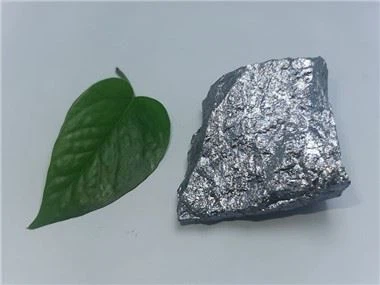

What are the grades of ferro silicon?
Oct 16, 2025
The grade of ferro silicon is based on the elemental silicon content. The common ferro silicon grades are mainly ferro silicon 75, ferro silicon 72, and ferro silicon 65, they which are widely used in steel making, foundry, and metallurgical industries.
Detailed Analysis Based on Application Requirements
The core of the choice lies in the trade-off between performance (silicon content and purity) and cost-efficiency.
1. Based on Deoxidation Performance
Prioritize 75-Grade Ferro Silicon:
Why: The higher silicon content (75% vs. 72%) means you need less total ferro silicon to achieve the same level of deoxidation. This leads to a more efficient and potent reaction, resulting in cleaner steel with fewer oxide inclusions.
Application: Essential for producing high-quality steel, thin-slab casting, and steel grades where superior cleanliness and mechanical properties are critical (e.g., ball bearings, automotive deep-drawing steel).
Consider 72-Grade Ferro Silicon:
Why: For many standard steelmaking operations, the deoxidation power of 72% FeSi is entirely adequate. The process is more forgiving.
Application: Ideal for common carbon steels, construction rebar, and other applications where extreme purity from oxides is not the primary concern.
2. Based on Final Product Silicon Content Specification
Prioritize 75-Grade Ferro Silicon:
Why: When the alloying process requires a precise and significant addition of silicon, the 75-grade provides more silicon per kilogram added. This allows for better control and predictability in hitting the target chemical composition, especially for high-silicon steels.
Application: Crucial for electrical steels (silicon steels) which require precise silicon content (e.g., 3%) to achieve specific magnetic properties. Also for stainless steel and silicon-based special alloys.
Consider 72-Grade Ferro Silicon:
Why: If the final silicon content requirement is not extremely high or stringent, the 72-grade is perfectly suitable. The slightly lower yield can be easily compensated for by adding a marginally larger amount.
Application: General alloying where silicon is a secondary element, or in ferrous foundries for producing cast irons, where the exact silicon content can have a wider range.
3. Based on Impurity Level Requirements
This is often the most critical factor for high-end products.
Prioritize 75-Grade Ferro Silicon (Low-Aluminum & Low-Carbon Variants):
Why: The production process for 75% FeSi often results in lower levels of impurities like Aluminum (Al) and Carbon (C). High Al can form hard, abrasive alumina inclusions that harm steel quality. High C can be detrimental in ultra-low carbon steels.
Application: Non-magnetic steels, advanced high-strength steels (AHSS), and alloys for critical applications (aerospace, military) where strict control over trace elements is mandatory.
Consider 72-Grade Ferro Silicon:
Why: Standard 72-grade FeSi typically has higher allowable levels of impurities. For many applications, these levels are harmless.
Application: Most common steel grades where the specifications for Al, C, and other trace elements are not exceptionally tight.
4. Based on Cost-Effectiveness
Prioritize 72-Grade Ferro Silicon:
Why: It is almost always less expensive per metric ton than 75-grade FeSi. In large-scale production of commodity-grade steel, this price difference translates to significant cost savings.
Application: Large-volume production of standard steels (e.g., rebar, wire rod, merchant bar) where saving even a small amount per ton is crucial for profitability.
Prioritize 75-Grade Ferro Silicon:
Why: While the initial cost is higher, the total yield is better. You use less material to achieve the same silicon addition, which can offset the higher unit price. Furthermore, the superior quality prevents costly defects and rework.
Application: When the performance and quality of the final product justify the premium cost. The "cost of failure" for using a lower-grade material is too high.
Conclusion and Final Recommendation
Your final point is the most crucial: Combine with actual production testing.
Start with the Specification: Define the required silicon content and maximum allowable impurities for your final product.
Perform a Cost-Benefit Analysis: Calculate the cost per unit of silicon delivered for both grades, factoring in your yield and efficiency.
Run Industrial Trials: The only way to be certain is to run a trial heat in your furnace. Compare the actual yield, deoxidation efficiency, final composition control, and the quality of the resulting steel or alloy.
In summary:
Use 75-Grade Ferro Silicon when quality, precision, and purity are non-negotiable.
Use 72-Grade Ferro Silicon when cost-efficiency is the primary driver and the application can tolerate its performance characteristics.
Would you like to know more about FeSi72 or FeSi75, please email me at info@kexingui.com