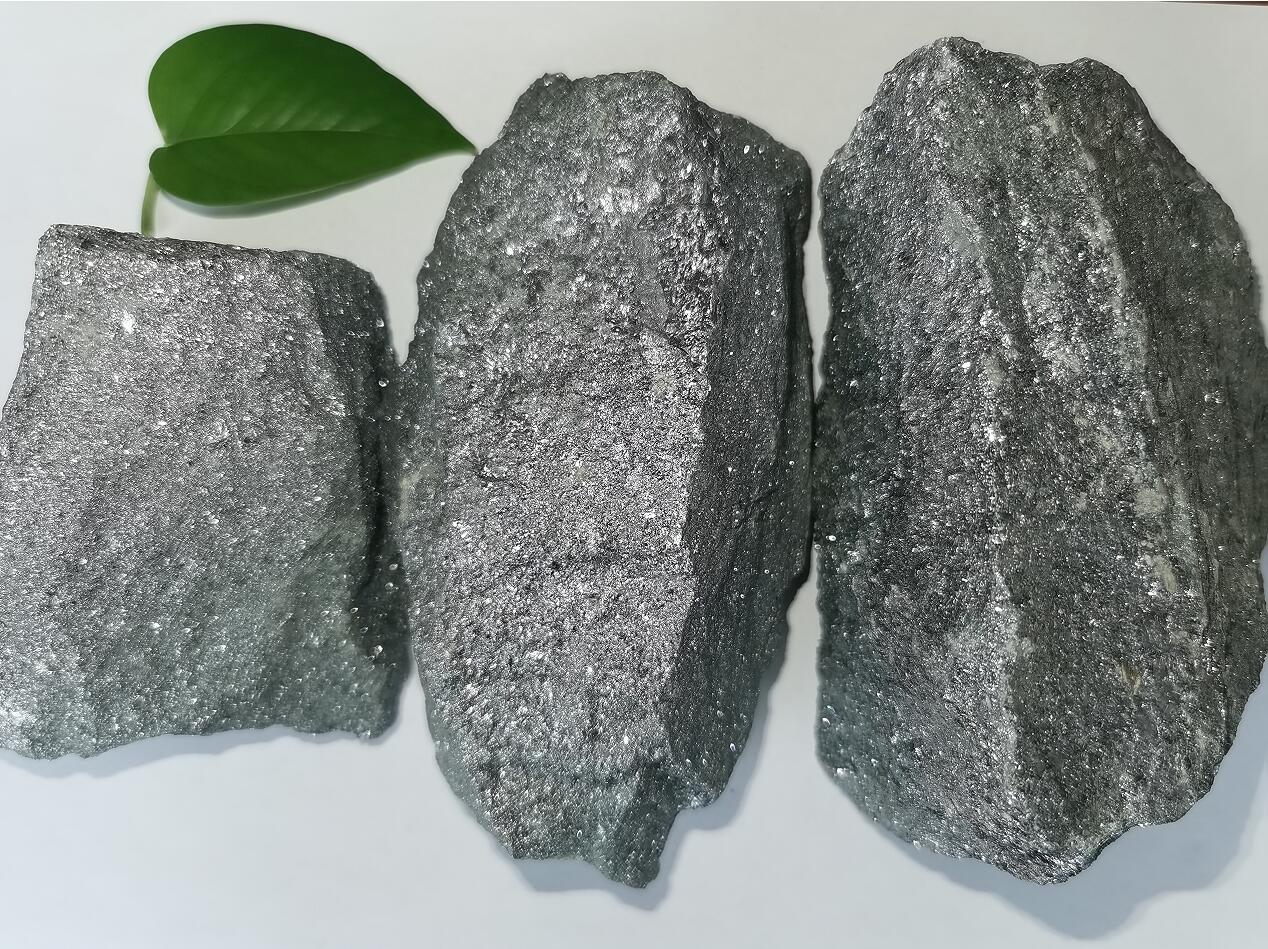

Where Can High Carbon Silicon Be Used?
Sep 28, 2025
Where can high carbon silicon be used?
1. Steel Industry (Main Application): This is the largest and most important application market for high carbon silicon, primarily used as a deoxidizer and alloying additive.
Deoxidizer: During the steelmaking process, molten steel contains a large amount of oxygen, which can seriously affect the quality of the steel. The silicon and carbon in high carbon silicon both have strong deoxidizing properties, effectively removing oxygen from the molten steel and improving the purity of the steel. Compared to pure ferrosilicon, high carbon silicon is less expensive.
Alloying Additive: Silicon is a key alloying element in steel. Adding silicon improves its strength, hardness, elasticity, and wear resistance. High carbon silicon also introduces a certain amount of carbon, making it suitable for steel grades that require carbon enrichment.
2. Foundry Industry: High carbon silicon plays a vital role in cast iron production, particularly ductile iron.
Inoculant: Adding high carbon silicon before pouring molten iron can act as an inoculant, promoting the precipitation and refinement of graphite, significantly improving the strength, toughness, and mechanical properties of the cast iron.
Silicon and Carbon Enhancers: High carbon silicon can simultaneously add silicon and carbon to molten iron, adjusting its chemical composition to achieve the desired grade. This is crucial for producing high-performance iron castings.
3. Industrial Silicon/Ferro silicon Smelting
In the smelting of silicon-based products, high carbon silicon can be used as a reducing agent or raw material.
Reducing Agent: In the production of industrial silicon or ferrosilicon, a reducing agent is required to reduce silica (quartz sand). High carbon silicon, which contains highly active carbon and silicon, can be used as part of the reducing agent to reduce production costs.
Raw Material: High carbon silicon can be used as one of the raw materials in the production of specific ferrosilicon grades, optimizing the formulation.
4. Other Emerging or Specific Industries
The Solar Photovoltaic Industry: This industry requires extremely high raw material purity. High-carbon silicon cannot be directly used to produce solar-grade high-purity silicon. However, it can be used as a raw material for metallurgical silicon purification, a low-cost process. Through complex metallurgical physical and chemical processes, impurities in high-carbon silicon can be removed, ultimately refining it to solar-grade purity. This application has specific requirements for the composition and impurity content of the high carbon silicon.
Silicon Carbide (SiC) Synthesis: Silicon carbide is an important refractory, abrasive, and semiconductor material. The silicon and carbon in high carbon silicon react directly to form silicon carbide at high temperatures, making it an ideal raw material for its synthesis.
Refractory Materials: In certain refractories, the addition of high carbon silicon can leverage its high-temperature reactivity to improve the material's corrosion resistance and thermal shock stability.
Core Advantages: The greatest attraction of high carbon silicon is its high cost-effectiveness. It is often produced as a byproduct of the main product, making it much less expensive than pure ferro silicon or metallic silicon. As long as its composition meets the requirements of a specific process, it is a very cost-effective option.
Would you like to know more about high carbon silicon, please email us: info@kexingui.com