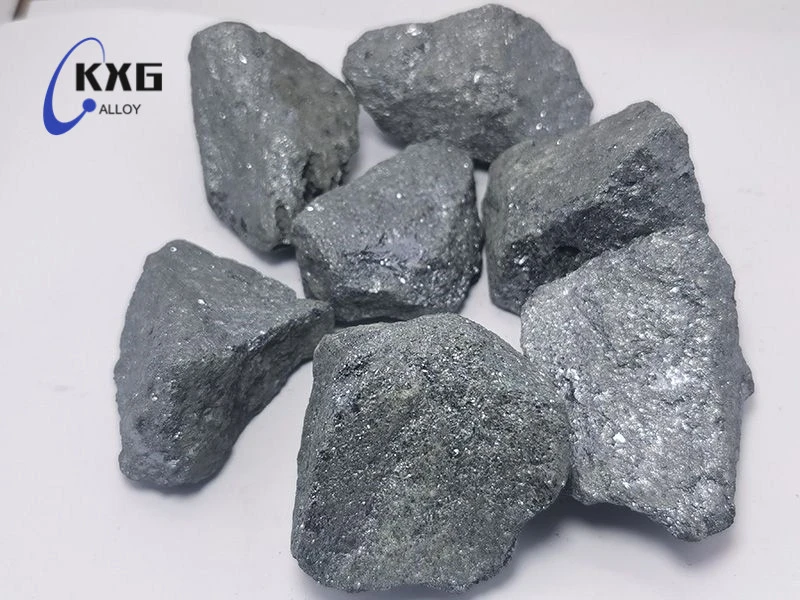

The difference between high carbon silicon and silicon carbide
Aug 13, 2025
I. Introduction
High carbon silicon and silicon carbide are two seemingly similar materials, but they possess significant differences. They differ in composition, properties, and applications. This article will explore these differences in detail to provide readers with a better understanding of the two materials.
II. Compositional Differences
1. High carbon silicon: High carbon silicon is a composite alloy composed of silicon and carbon, but it is not a pure compound. It is commonly used in steel production as a deoxidizer, effectively reducing the oxygen content in molten steel. High carbon silicon has a high density and high purity, is non-polluting to molten steel, and maintains a high and stable recovery rate.
2. Silicon carbide: Silicon carbide (SiC) is a compound semiconductor material composed of carbon and silicon chemically bonded together. It possesses high hardness, high thermal stability, and excellent chemical stability, making it ideal for use under extreme conditions such as high frequency, high voltage, and high temperature. Silicon carbide's wide bandgap also makes it an ideal material for high-temperature, high-frequency, high-power, and light-emitting electronic components.
III. Property Comparison
1. Physical Properties: Although high carbon silicon contains silicon and carbon, it lacks the high hardness and thermal stability of silicon carbide. Silicon carbide has a Mohs hardness of 9.5, second only to diamond, and has a low coefficient of thermal expansion and good thermal conductivity.
2. Chemical Properties: Silicon carbide exhibits excellent chemical stability, resisting corrosion from acids, bases, and solvents, making it suitable for harsh chemical environments. High-carbon silicon, despite its high purity, does not excel in this regard.
IV. Applications
1. Applications of High Carbon Silicon: High carbon silicon is primarily used for deoxidation in steel production, improving the quality of molten steel and improving steel properties. It can also be used as silicon briquettes, which has broad market prospects.
2. Applications of Silicon Carbide: Silicon carbide is particularly widely used in the semiconductor field, including power electronics (such as MOSFETs and JFETs), semiconductor lighting (such as LED substrates), radio frequency and microwave devices, and optoelectronic devices. Furthermore, silicon carbide is also used in nuclear energy, aerospace, precision machinery, and other fields, demonstrating its diverse application potential.
V. Conclusion
In summary, high carbon silicon and silicon carbide exhibit significant differences in composition, properties, and applications. High carbon silicon primarily functions as a deoxidizer in steel production, while silicon carbide, with its unique physical and chemical properties, exhibits broad application prospects in various high-tech fields, including semiconductors. Understanding these differences will help us better select and utilize these two materials, driving the development and progress of related industries.
If you are interested in high carbon silicon, please contact us: info@kexingui.com