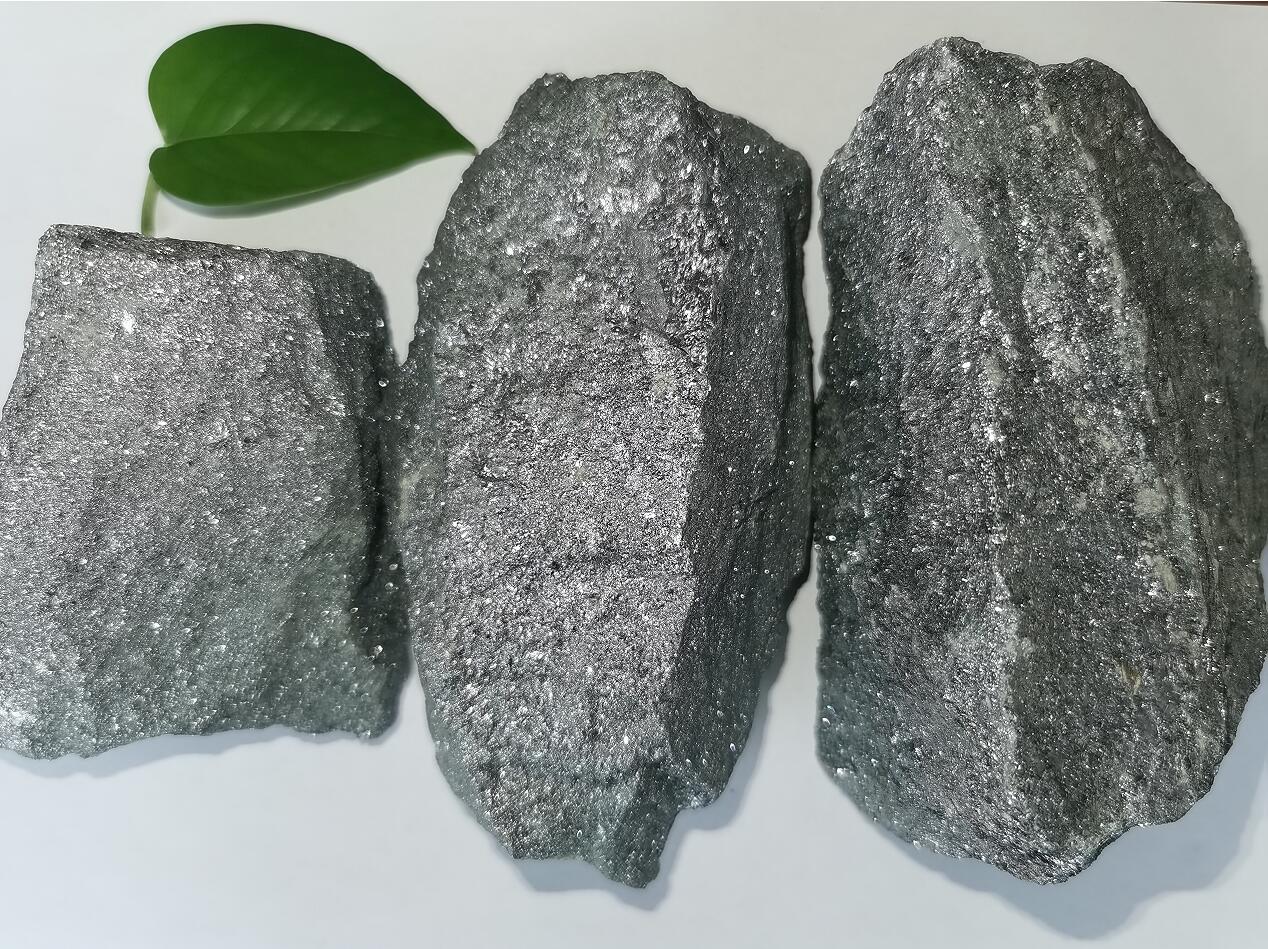

Silicon Carbon Alloy: The Engine of Green Steelmaking
Sep 08, 2025
I. Elemental Code: The Symbiotic Law of Silicon and Carbon
The value of silicon carbon alloys stems from the precise coordination of these elements:
Silicon content 58%-68%: Steelmaking-grade products require ≥62%. A special steel mill used a 55% silicon alloy, resulting in excessive oxygen content in gear steel and a 25% surge in flaw detection failures.
Carbon content 14%-18%: The golden range in the casting industry is 16%-17%. A valve body manufacturer in Jiangsu scrapped castings due to shrinkage cavities in a 13% carbon alloy.
The critical red line: Aluminum >2.5% blocks continuous casting nozzles, and phosphorus >0.04% induces cold brittleness. In 2024, a wind turbine main shaft with a phosphorus content of 0.06% had an impact energy at -40°C less than 60% of the design value.
Elements synergistically create qualitative change:
Silicon carbon golden ratio: A Si/C ratio of 3.8-4.2 achieves optimal deoxidation and carburization, reducing Shagang's converter smelting time by 12 minutes.
Active silicon form: Amorphous silicon accounts for over 30%, reacting three times faster than crystalline silicon.
Trace amounts of calcium (0.8%-1.5%) improve fluidity and reduce surface cracks in continuous casting ingots by 85%.
II. Performance Revolution: A Triple-Effect Industrial Tool
(I) "Dual-Effect Engine" at the Smelting End
1. Composite Deoxidation
Silicon preferentially combines with oxygen in molten steel, forming low-melting-point SiO₂ that floats, reducing oxygen content per ton of steel to below 15 ppm. A Hebei plant replaced the traditional ferrosilicon + carburizer solution, achieving a cost reduction of 140 yuan/ton.
2. Precision Carburization
Carbon is dispersed in the form of nano-silicon carbide, eliminating the uneven composition caused by floating traditional carburizers. An automotive steel sheet mill reduced carbon tolerance control from ±0.05% to ±0.02%.
3. Exothermic Temperature Increase
Silicon oxidation releases heat, raising molten steel temperature by 25-30°C. This allows short-process steel mills to reduce arc heating time, saving 45 degrees Celsius per ton of steel.
(II) "Defect Busters" in Foundries
Anti-shrinkage Porosity Experts: Micro-expansion during solidification compensates for shrinkage, reducing the scrap rate at a Shandong wheel hub factory from 18% to 4%;
Graphitization Promoters: Promoting the precipitation of fine flake graphite, improving cutting efficiency in machine tool guide rail castings by 55%;
Impurity Purification: Silicon-carbon reactions absorb aluminum and titanium impurities in steel, reducing inclusions in a nuclear power plant pump body by 70%.
Learn more, contact us: info@kexingui.com