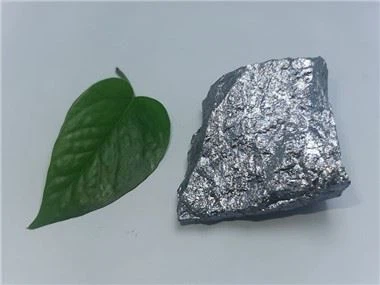

Principle of silico-manganese alloy
Oct 05, 2021
Electric furnace smelting of silico-manganese alloy is the same as smelting carbon ferromanganese. Fe and P in the charge are reduced first, and the high-valent oxide of Mn is decomposed in the upper layer or reduced by CO to low-valent oxide MnO. The low-valent oxide MnO is then combined with C. The reaction produces carbides, and the reaction formula can be written as
MnO+(1+x)C→MnCx+CO
As the charge sinks into the high temperature zone, the reaction of C reducing SiO2 begins to take place
SiO2+2C=Si+2CO
The reduced Si reacts with the already formed MnCx to form a silico-manganese alloy and promotes the reduction of Si. The reaction formula is
SiO2+2C+MnCx=Mn·Si·Cx+2CO
The more Si is formed, the more thoroughly the carbides are destroyed, and the lower the carbon content of the alloy. When the silicon content of the alloy is less than 23.5% (such as silicomanganese 10, silicomanganese 14, silicomanganese 17 and silicomanganese 20), the reaction of silicon destroying carbide can be written as
(Mn, Fe)7C3+7Si=7(Mn ·Fe)Si+3C
If the silicon content is higher, the reaction that destroys carbides can be written as
(Mn, Fe)7C3+10Si=7(Mn·Fe)Si+3SiC