
What's The Applications Of Metallic Silicon
Jun 05, 2026
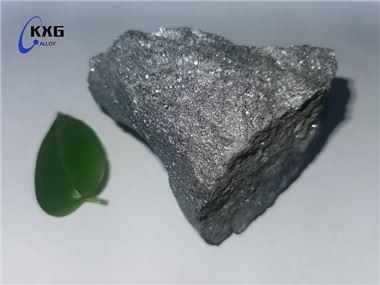
Uses of Metallic Silicon(silicon metal) : Metallic silicon (Si) is industrially purified elemental silicon, primarily used in the production of organosilicon compounds, the manufacture of high-purity semiconductor materials, and the formulation of alloys for special applications.
1. Production of organosilicon products such as silicone rubber, silicone resin, and silicone oil. Silicone rubber has good elasticity and high-temperature resistance, used in the manufacture of medical supplies and high-temperature gaskets. Silicone resin is used in the production of insulating varnishes and high-temperature coatings. Silicone oil is an oily substance whose viscosity is minimally affected by temperature; it is used in the production of high-grade lubricants, polishes, fluid springs, and dielectric fluids. It can also be processed into a colorless and transparent liquid for use as a high-grade waterproofing agent sprayed on building surfaces.
2. Manufacturing high-purity semiconductors. Modern large-scale integrated circuits are almost entirely made using high-purity metallic silicon, and high-purity metallic silicon is also the main raw material for the production of optical fibers. It can be said that metallic silicon has become a fundamental pillar industry of the information age.
3. Alloy formulation. Silicon-aluminum alloys are the most widely used silicon alloys. Silicon-aluminum alloy is a strong composite deoxidizer. Replacing pure aluminum in the steelmaking process improves deoxidizer utilization, purifies molten steel, and enhances steel quality. Silicon-aluminum alloy has low density, a low coefficient of thermal expansion, and good casting and wear resistance. Alloy castings made from it possess high impact resistance and excellent high-pressure compaction, significantly extending service life. It is commonly used in the production of aerospace vehicles and automotive parts. Silicon-copper alloy has good weldability and is less prone to sparking upon impact, providing explosion-proof properties and making it suitable for manufacturing storage tanks. Adding silicon to steel to create silicon steel sheets greatly improves the steel's magnetic permeability, reduces hysteresis and eddy current losses, and can be used to manufacture transformer and motor cores, improving their performance.
Metallic silicon (also known as industrial silicon in my country) is a trade name that emerged in the mid-1960s. Its emergence is related to the rise of the semiconductor industry. Currently, the internationally accepted practice is to classify commercial silicon into metallic silicon and semiconductor silicon. Metallic silicon is a product smelted from quartz and coke in an electric furnace. Its main component, silicon, contains approximately 98% silicon (in recent years, silicon with a Si content of 99.99% has also been reported). The remaining impurities include iron, aluminum, and calcium. Semiconductor silicon is high-purity metallic silicon used to manufacture semiconductor devices. It is sold in polycrystalline and monocrystalline forms, with the former being cheaper and the latter more expensive. It is classified into various specifications according to its different applications. Statistics show that in 1985, the world consumed approximately 500,000 tons of metallic silicon, of which about 60% was used for aluminum alloys, less than 30% for organosilicon, about 3% for semiconductors, and the remainder for steel smelting and precision ceramics.
If you want to know the price of metallic silicon(silicon metal), please send me an email: info@kexingui.com